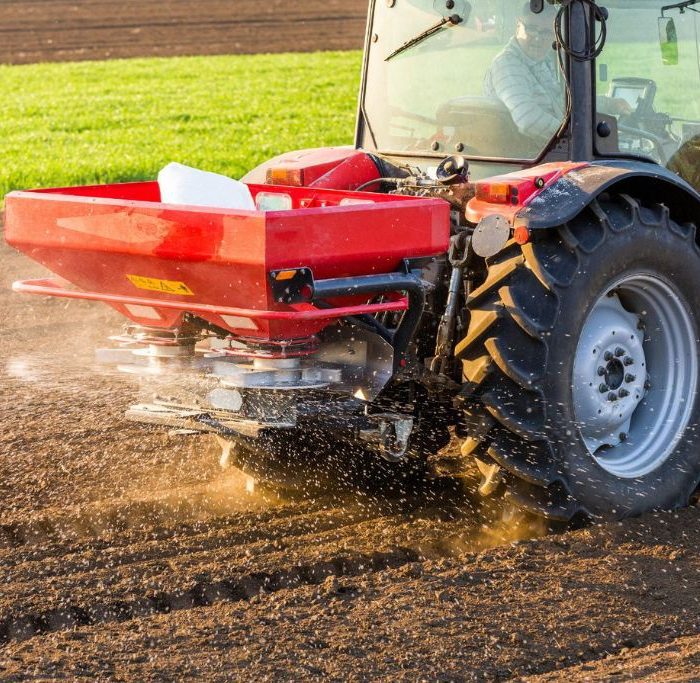
What a difference a year makes! Last Spring the weather fluctuation and ground conditions were atrocious, making Spring work and lambing a challenging experience at best. Now a distant memory and with March this year on track to be the warmest and driest since records began this results in a much more enjoyable lambing season and allows our food producers to get on top of all their Spring work, enabling them to get ahead of the workload for the coming year. Many are hoping that this weather is a sign of things to come during Summer allowing them to fill up their silage pits and crop stores once again.
In addition to the weather creating some positivity and optimism, the current output prices are giving a much-needed boost with cattle and sheep prices of all types being at record highs. Cattle values are continuing to increase week by week. Lamb prices are at a level where producers feel there is a margin on what they are selling, giving them confidence to continue and see results.
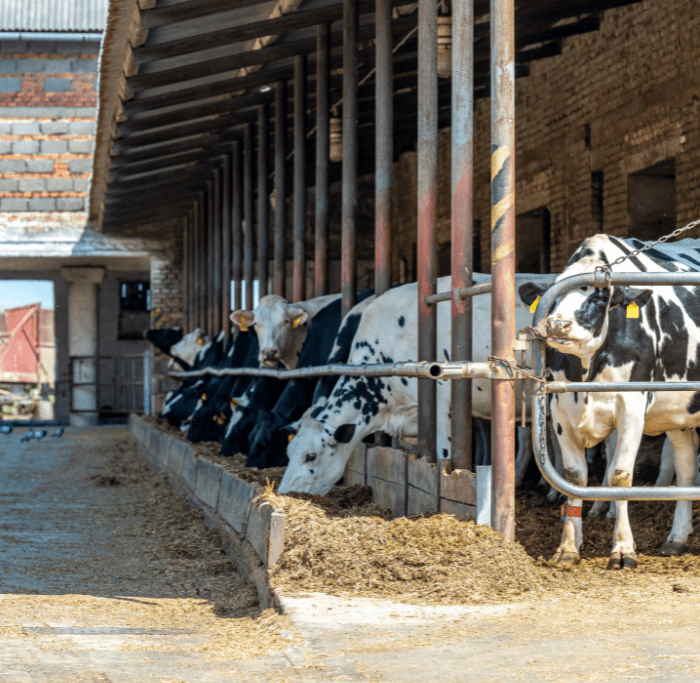
The dairy sector, however, does appear to have become a two-tier system depending on whom milk is being supplied to. At one end of the spectrum, producers are receiving upwards of 50 pence per litre and able to invest in their business and being recognised for their hard work and production. Whilst at the other end, there are producers seeing the milk price decreasing and are receiving in the region of 35 pence per litre, a level which struggles to cover their cost of production, let alone allow for any investment. There is very little opportunity currently for these producers to move elsewhere, while they nervously watch the milk figures, which appear to be unaligned across the sector.
Coupled with the increase in output prices, input prices have remained stable. The three F’s (Feed, Fertiliser and Fuel) in particular, have seen some reduction from 12 months ago, but more importantly, we have not seen any substantial increases. This has allowed farmers to benefit from the increased output prices and generate larger gross margins.
During the last few months, we have been proactively working with our clients to help manage the potential tax consequences of this mini boom which could result in increased tax liabilities. As we are all too aware, increased profits does not always result in an increase in cash.
However, there are other factors with some substantial barriers being put in their way. Many feel like the new Government is wanting to force a proportion out of the industry and have no concern or concept for the nation’s food security.
This started with the 30 October 2024 Budget dealing a blow to many family farming businesses with the removal of the 100% Agricultural Property Relief (APR) and Business Property Relief (BPR) instead capping these at £1m per person in total. Although the Government did not seem to think this would affect many family businesses, it looks as though their estimations are way out and I would urge all businesses to review the potential impact of this and consider what actions are required.
At the same time Defra announced a much faster phasing out of the Basic Payment Scheme (BPS) than was previously expected (this change did not affect the devolved administrations). The result of this will clearly have a negative impact on farm business profits and cashflows, which farmers again will need to plan for.
Part of Defra’s spin on the reduction of the BPS was to increase the uptake of the Sustainable Farming Incentive (SFI), which paid farmers and land managers to carry out sustainable farming practices. Many farmers did engage with the SFI but many could not, due to already being in other schemes. Some were in the process of applying, when on the 11 March 2025, without warning the Government suddenly stopped accepting new applications, leaving many in limbo with their explanation given, as the ‘budget had been allocated’.
We are all aware that farmers are a resilient bunch who will no doubt face these challenges head on, but with all this in mind many farmers are going to have to adapt, plan and review the impact these changes will have on their business, as every enterprise will be affected differently. I would urge everyone within the Agri-sector to evaluate these challenges and look to future proof your business against them whilst exploring any opportunities which will no doubt arise are taken advantage of.
Explore more about how our Specialist Agricultural Accountancy Team can help you
18 June 2026
30 May 2026
13 March 2026
12 March 2026
27 November 2025
27 November 2025
13 November 2025
18 September 2025
1 September 2025
15 August 2025
3 July 2025
30 May 2025
1 April 2025
16 October 2023
25 September 2023
5 July 2023
4 July 2023
10 June 2022
15 July 2021
We want to keep you up to date with relevant news, information, advice and changes which might impact you or your business. To ensure you get the latest updates delivered directly to your inbox, sign up to our e-bulletins below.
Available to download on iOS and Android by visiting the links below.
Unique access code: DavidAllen