-
Share
-
If your business relies on computers, email or cloud-based software, IT support is not optional. The question is not whether you need it, but whether what you currently have is working for you.
Most small businesses reach a tipping point. What worked when the team was small starts to cause real problems as the business grows. Staff are left waiting when systems fail, and the person who “knows about computers” spends more time firefighting than doing their actual job.
This article outlines what IT support for small businesses entails, how it differs from informal arrangements, the typical costs associated with it, and what to consider when selecting a provider.

Why IT support matters more than most small business owners realise
For many small businesses, an IT failure can result in lost orders, delayed work, and damage to reputation. Effective IT support reduces these risks by running your systems reliably, catching potential problems and getting your business back on track quickly if something goes wrong.
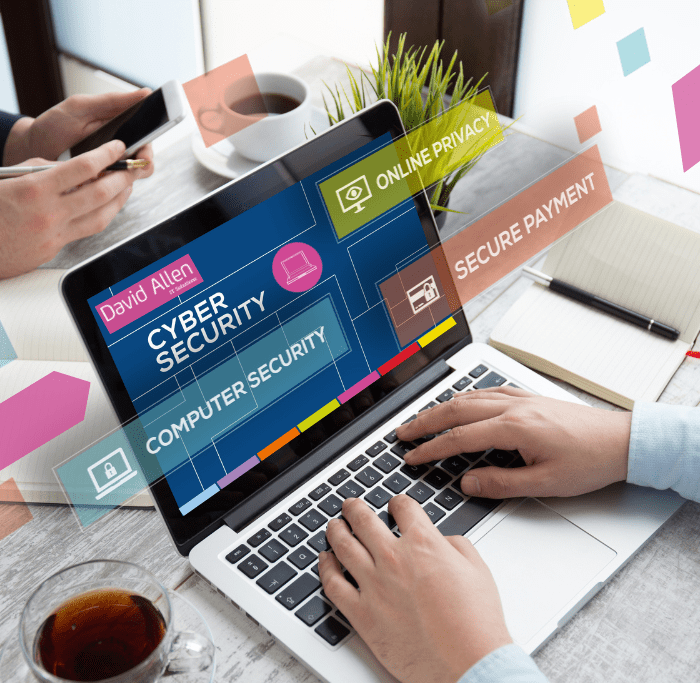
Cybercrime targeting is also a concern. Although phishing attacks on small and micro businesses decreased from 2024 to 2025, they were still prevalent at 35% for micro businesses and 42% for small businesses. Ransomware attacks, phishing emails, and data breaches are no longer problems that only large organisations face.
By employing small business IT support, your operation benefits from active threat monitoring, up to date defense, and a rapid response should an attack occur.
Beyond security, unreliable technology can be costly in other ways. Staff productivity falls when systems are slow or unstable, and persistent technical issues can damage the experience you deliver to clients.

The difference between ad-hoc and managed small business IT support
Ad-hoc support fixes problems after they happen, while managed IT support aims to prevent them from happening in the first place.
Here’s a breakdown of the key differences:
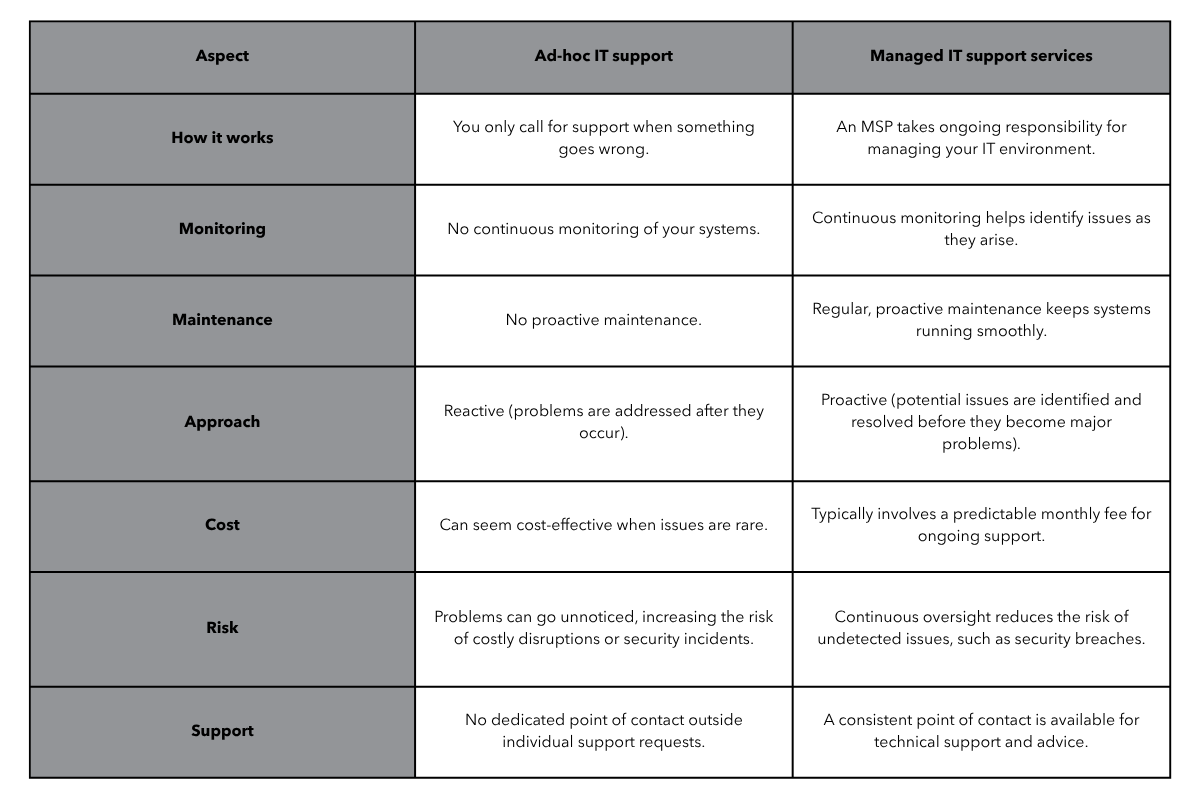
For a closer look at the cost implications, read our article on why ad-hoc IT support may be costly for your business.
Did you know: The MSP market is estimated to have a compound annual growth rate of 12% from 2022 to 2027? This signals that managed IT support is increasingly where businesses are heading.
What a good managed IT support package typically includes
A well-structured IT support package should cover everything your business needs to run reliably and securely.
Most IT support packages for small businesses include a combination of the following services:
- Helpdesk support by phone or remote access
- Proactive system monitoring
- Software updates and security patching
- Antivirus and cybersecurity tools
- Data backup and recovery
The right combination for your business depends on the size of your organisation, your sector, and your existing IT support setup. A five-person business operating mostly in the cloud has very different needs from a 30-person team running on-site servers with a mix of devices and software.

To figure out what IT support features you need, ask yourself the following questions:
- How often do your staff experience IT issues, and how long do they typically wait for a resolution?
- Do you have a designated employee who manages IT, even on a part- time basis? Or does everything get passed to whoever is most comfortable with technology?
- Do your staff work remotely, across multiple sites, or with personal devices?
- Do you handle sensitive client or financial data that would create serious problems if it were lost, stolen, or inaccessible?
- Are you running on-site servers and physical infrastructure, or are you mostly cloud-based?
- How quickly is your business growing, and are your current systems keeping pace?
- Have you experienced a security incident, data loss, or significant downtime in the last two years?
The cost of IT support for small businesses in the UK
Based on current market rates,* small businesses in the UK can expect to pay somewhere in the region of £40 to £100 per user per month for IT support. However, prices vary depending on the complexity of your setup, the level of cover required, and whether you need out-of-hours or on-site support.
Remote IT support for small businesses is typically priced on a per-user or per-device basis, with monthly costs varying depending on the level of cover included.
Some providers offer tiered packages; others price on a bespoke basis. It is worth considering what is not included as carefully as what is. For example, a low headline price that excludes on-site visits or cybersecurity tools may not represent good value in practice.
*These figures are from a variety of sources, including real managed IT support companies for small businesses in the UK and market trends in 2026.

What to look for when choosing an IT support provider
The right IT support provider should understand the sector your business operates in and the necessary technical skills to support your IT needs. The IT support provider should also be proactive, transparent, and easy to reach.
Key questions to ask include:
- What are your response and resolution times, and are these guaranteed in a service level agreement (SLA)?
- Do you have experience in my sector?
- What cybersecurity services do you offer?
- Are you a Microsoft Solutions Partner?
Microsoft Solutions Partner status indicates that a provider meets specific standards for capability and technical expertise.
The location of your IT support provider is also something to consider. A larger, national provider may have extensive resources, but with a broad client base to manage, the personal attention and response times they can offer may be more limited.
A regional provider with a team nearby will often know your business by name, respond more quickly, and, when you need them on-site, be there faster.

What to look for when choosing an IT support provider
The right IT support provider should understand the sector your business operates in and the necessary technical skills to support your IT needs. The IT support provider should also be proactive, transparent, and easy to reach.
Key questions to ask include:
- What are your response and resolution times, and are these guaranteed in a service level agreement (SLA)?
- Do you have experience in my sector?
- What cybersecurity services do you offer?
- Are you a Microsoft Solutions Partner?
Microsoft Solutions Partner status indicates that a provider meets specific standards for capability and technical expertise.
The location of your IT support provider is also something to consider. A larger, national provider may have extensive resources, but with a broad client base to manage, the personal attention and response times they can offer may be more limited.
A regional provider with a team nearby will often know your business by name, respond more quickly, and, when you need them on-site, be there faster.